
The New Trend Buyers Need to Watch
May 22, 2026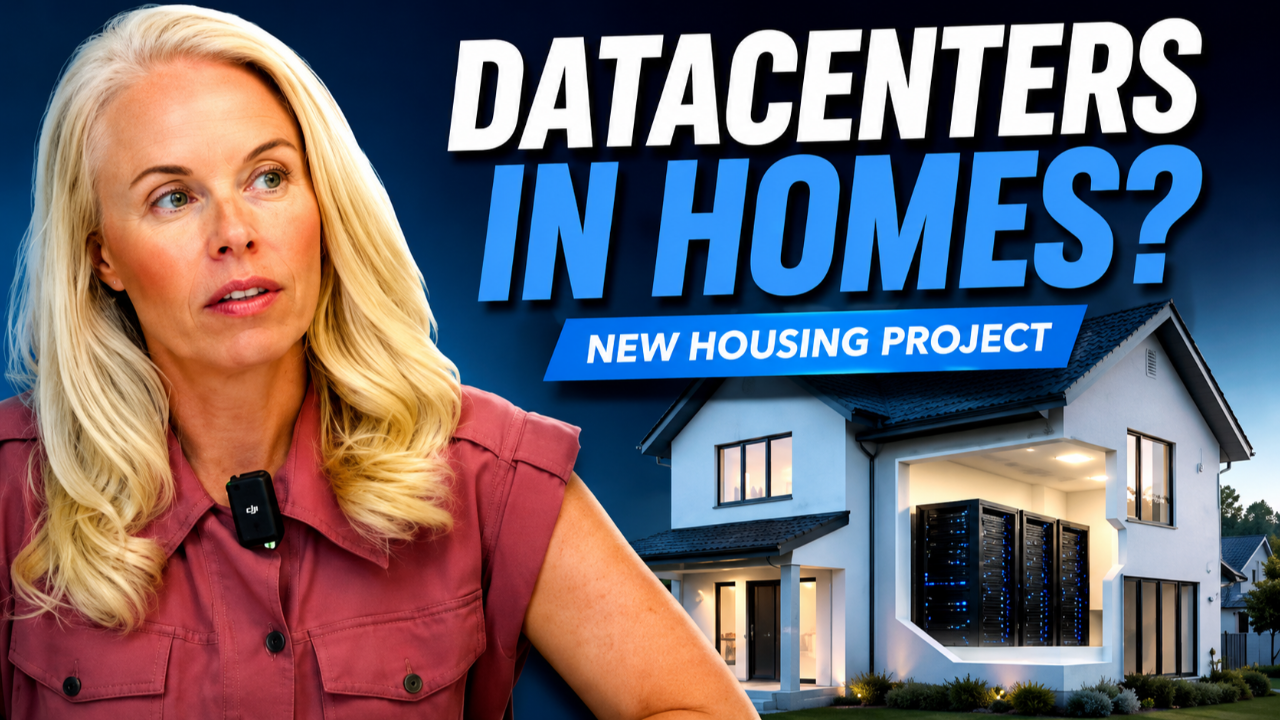
Right now, there’s a huge push for more data centers because of AI.
The problem?
Many communities don’t want them.
People are concerned about:
- electrical usage
- water consumption
- noise
- environmental impact
- property values
- long-term health concerns
So instead of trying to push giant standalone data centers into neighborhoods…
Some companies appear to be exploring something else entirely.
Mini data centers attached directly to homes.
What’s Actually Happening
One of the recent announcements that caught attention involved a home builder partnering with a technology company to install small AI-supporting infrastructure units on the sides of new construction homes.
The idea is that:
- each house hosts a small unit
- those units work together collectively
- and together they function like one larger distributed data center for AI capacity
And this is where I need buyers to really pause.
Because this isn’t:
“Hey, you get cool smart-home tech.”
This is:
“You own the home, but a corporation owns the infrastructure attached to your property.”
You Own the House… But Not the Box
That’s the part that would personally stop me immediately.
You:
- pay the mortgage
- pay the taxes
- pay the insurance
- maintain the property
But the equipment attached to your home?
Not yours.
And according to reports on these agreements, removing it could involve legal consequences due to easements or contractual obligations tied to the property.
So buyers need to understand:
This isn’t just “technology.”
It’s long-term infrastructure tied to your home.
The Sales Pitch Buyers Will Probably Hear
I can already see how this is likely going to be marketed.
You’ll hear things like:
- lower utility costs
- backup battery systems
- energy efficiency
- cutting-edge smart technology
And on the surface, that sounds appealing.
But the questions I immediately start asking are:
- For how long are utilities reduced?
- Is it contractually guaranteed?
- What happens when you sell the house?
- Does the next buyer get the same benefit?
- Who maintains the equipment?
- What happens if it fails?
- Does insurance become more expensive?
Because those are the real-world questions that matter.
Insurance and Liability Concerns
One of the biggest things that stood out to me during my research was homeowners' insurance.
Most standard homeowner policies are designed to insure your property.
Not a corporate infrastructure attached to your house.
And if insurers determine these systems create:
- additional fire risk
- electrical risk
- liability exposure
There’s a very real possibility premiums could increase.
That matters.
Especially when affordability is already a huge issue for buyers.
The Resale Problem
This is the biggest issue for me personally.
Resale.
Because if I found my dream home…and it had a permanent data center attached to the side of it?
I would walk away.
Immediately.
And I know I’m not alone in that.
We already see buyers hesitate over:
- solar lease agreements
- difficult-to-maintain systems
- added insurance concerns
- long-term equipment obligations
So, adding corporate AI infrastructure into the mix?
That’s going to automatically eliminate a huge number of buyers.
What Buyers Need to Ask Before Purchasing
If you’re buying new construction moving forward, you need to ask questions.
Real questions.
Including:
- Is there any third-party infrastructure attached to this property?
- Are there easements tied to the home?
- Can the equipment be removed?
- Who owns it?
- Who maintains it?
- What happens if it malfunctions?
- What are the long-term utility terms?
- Will insurance costs increase?
- How could this impact resale?
Because once you close on the house, these things become your problem—not the builder’s.
The Bottom Line
Homeownership should feel like stability.
Not like you accidentally signed up to host corporate infrastructure on your property forever.
And look—if someone fully understands all of this and still wants the house, that’s their choice.
But buyers deserve transparency.
They deserve to understand:
- what’s attached to the property
- what rights they do or don’t have
- and how it could impact them financially long term
Because the last thing I want is someone buying what they think is their dream home…
only to realize later there’s something attached to it they can’t remove, don’t control, and now have to explain to future buyers.
If you ever want a second set of eyes on a purchase, a builder contract, or something that feels “off,” that’s exactly the kind of stuff my team and I help people think through every day. Sometimes asking the right questions up front saves you from a massive headache later.
📞 Call or Text Me: (786) 933-2077
🏡 Get Pre-Approved: https://www.zerostressmortgage.com
📅 Set Up a Time to Chat: https://calendly.com/jennifer-beeston